Kategorien
ROMA

Racial profiling prevents Roma entering the EU from Macedonia/Dialektik der europäischen Reisefreiheit

Roma claim a crackdown on the flow of asylum seekers into the EU has effectively barred them from leaving Macedonia.

by Ljubica Grozdanovska Dimishkovska, 27 June 2012.

SKOPJE| Djengis seems an unlikely candidate to seek asylum abroad.
The 30-year-old Rom from Kumanovo in northern Macedonia is a working man, with a job doing manual labor, and a family man, the father of two. But when he tried to cross the border in mid-June to visit his brother in Serbia, he was turned back.
“I said I was planning to stay at my brother’s house for two weeks,” Djengis recalled of the encounter at the Tabanovce crossing. “The officer said I needed 1,000 euros, that I was supposed to have this money since I’m traveling to a foreign country.
Then he said there’s some notation in the [border control] records, according to which
I’m not allowed to leave Macedonia.”
The AZ notation, in Cyrillic characters, and the two parallel lines indicate that the bearer of this passport has been turned back at the border as a likely false asylum seeker. Djengis said he was not shown physical proof of his supposed status or given a written explanation as to why he was barred from crossing.
“If we [Roma] are not allowed to travel,” he said a week after the incident, “why does the state ask us to pay for passports?” Ostensibly, Macedonian Roma, like their compatriots, are indeed free to travel, without visas or fees, not just to neighboring Balkan countries but throughout most of the European Union. In December 2009 the EU lifted a visa requirement in light of improved border-security measures such as biometric passports, under which citizens of Macedonia, Serbia, and Montenegro can stay in Schengen countries for up to three months as tourists, provided they do not work.
By the following March, organized “asylum” tours had sprung up. Travel agencies in Macedonian towns with majority Roma or ethnic Albanian populations offered to help people resettle in the EU, primarily in Belgium, Sweden, and Germany.
Asylum applications in the EU skyrocketed, according to Eurostat figures cited in a report by Skopje think tank Analytica. The Belgian and Swedish governments responded swiftly, sending all asylum seekers back to Macedonia and threatening to demand the European Commission reinstate the visa requirement. Brussels got the message.
In November 2010 the EU warned Macedonia, and Serbia as well, that it would suspend visa liberalization unless they checked the asylum wave. Macedonian authorities tracked down and closed the sham travel agencies and strengthened border controls.
On a recommendation from the Interior Ministry, the criminal code was amended to make it illegal to seek asylum without solid proof of cause, such as political repression. Many of the Roma who sought asylum had cited economic reasons. According to a November 2011 statement on the Macedonian government’s website, the ministry has also enhanced border controls “by using the method of risk analysis,” essentially creating a profile of “so-called false asylum seekers.” The upshot, some Roma activists and human rights groups say, is that many Macedonian Roma have been effectively barred from leaving the country, based on this profiling by border agents.
Asmet Elezovski is the president of the National Roma Centrum in Kumanovo, one of the few organizations in the country that provides detailed information about the rights and obligations of those traveling without visas. Kumanovo is located just 13.5 kilometers
(8.4 miles) from the Serbian border, near the Tabanovce station, and Elezovski said he has compiled files on about 20 cases of Roma being denied a crossing because of border guards’ presumptions. Elezovski said he is no supporter of Roma going abroad to seek asylum on false grounds, but he asserts that few are doing so. He does acknowledge that some use their three months abroad “to earn some decent money, so that they can live throughout the year.” The average monthly wage in Macedonia is 330 euros ($412).
“The majority of Roma are living on the edge of poverty, or even below that,” Elezovski said. “Why can Roma people from other countries enjoy the liberty of free movement and the Roma from Macedonia are suddenly a threat?” The Skopje office of the Helsinki Committee for Human Rights also says it has received dozens of complaints from Roma about hassles on the border. In some cases, police confiscated passports without explanation. “This is a violation of human rights, especially the right of free movement,” said Kiril Efremovski, a spokesman for the office. “I think the law on border surveillance should be revised, and there must be a campaign to raise awareness and respect basic human rights in situations like these.” Interior Ministry spokesman Ivo Kotevski said border controls have become more rigorous in the wake of the EU threats to restore visa restrictions, but he said guards are following procedures put in place “as a preventive measure we took as a state, so that we can prevent people who have no grounds to seek asylum in foreign countries” from doing so. He said the ministry does not keep statistics on the ethnicity of citizens stopped at the border: “We see them all as Macedonian citizens.” The tracking the ministry does indicates that fewer people overall are being turned back, Kotevski said. Only 30 people have been halted at the border in the last two months, he said, compared with an average of more than 300 per month in 2011 and early 2012. Some domestic and international rights groups dispute that the situation has improved. One of the most vocal critics is Samka Ibraimovski, a member of parliament from the Party for the Total Emancipation of the Roma and former director of the Reception Center, which works with asylum seekers within Macedonia. He has been photocopying the passports of Macedonian Roma denied border passage and filed an appeal on their behalf last month with the Constitutional Court. Ibraimovski said that according to accounts he has heard of border encounters, the only recent change is that guards have stopped stamping “AZ” – for azil, the Macedonian word for asylum – in the passports of people who are turned back. “Previously those people had the AZ stamp and two parallel lines across the stamp,” Ibraimovski said. “Now they’ve invented a new code. There’s no stamp with AZ, just the two parallel lines.” He maintained the change was made in response to international criticism of the border protocol, to make it appear that fewer people are being rejected. The issue also brought a delegation from the European Roma and Travelers Forum to Skopje in late May to discuss the matter with Macedonian authorities. The Strasbourg-based organization advises the Council of Europe on Roma issues. “We didn’t believe this was happening, but I became firmly convinced that [Macedonia] is engaging in a policy of discrimination when it happened to my mother at the beginning of May,” said Robert Rustem, the forum’s general secretary. “She was coming to visit me in France. She was stopped by police officers at the Skopje airport, who said she couldn’t leave the country. She was told there’s some note in the system about her passport and they must take her travel documents,” he said. “I had to confirm to the Macedonian authorities that I’m employed in France, that my mother has enough money to travel, and, most importantly, that I would complain to the Council of Europe about the situation.” Rustem said the forum would consider applying to international courts if cases such as his mother’s continue to occur. A longer-term solution, he said, is an EU system of temporary work permits, so that Roma would not feel the need to permanently resettle or be constantly suspected of wanting to do so. Macedonia already has several such bilateral agreements with individual countries, mostly for seasonal labor such as harvesting crops. Back in Kumanovo, Djengis said he plans to stay home for a while. He managed to avoid the dreaded AZ stamp when he tried to visit his brother, by hiding his passport and showing border agents only his government-issued identification card – sufficient documentation to travel, under an agreement with Serbia. Still, he said he is afraid to try again anytime soon.

Source:  

Kategorien
ROMA

Verletzter bei Explosion vor Büro von bulgarischer Roma-Partei/Strong Blast in Front of Euroroma Office in Bulgaria

Bei der Explosion eines Sprengsatzes vor dem Büro einer Partei der Roma-Minderheit in Bulgarien ist heute ein Mann verletzt worden. Der 59-Jährige habe ein vor dem Eingang des Sitzes der Ewroroma-Partei in der zentralen Stadt Sandanski liegendes Paket aufheben wollen, als dieses explodiert sei, teilte die Polizei mit. Demnach ereignete sich der Vorfall in der Früh in einer tagsüber sehr belebten Gegend. Die Polizei nahm nach eigenen Angaben Ermittlungen auf. Angaben zu möglichen Hintergründen der Tat machte sie zunächst nicht. Angehörige der Roma-Minderheit haben in Bulgarien unter Diskriminierungen zu leiden und sind immer wieder das Ziel gewalttätiger Überfälle. Der Anteil der Roma an der Gesamtbevölkerung Bulgariens liegt bei rund zehn Prozent.

Quelle: http://orf.at/stories/2128339/

A powerful blast, which shook the south-western Bulgarian town of Sandanski early on Friday, has left a 59-year-old Roma man in critical condition.
According to Georgi Kostov from the district police directorate in Blagoevgrad, Malin Iliev was passing by when he noticed a suspicious package in front of the office of the Euroroma party in the town.
When he lifted the package, the bomb went off, tearing off one of Iliev’s arms.
The accident happened at around 6 a.m. on Friday.
The man was taken to the hospital in Sandanski and his life is in danger.
According to preliminary reports, Iliev was on the Euroroma list of candidates at the last round of local elections in the town.
The investigation is at an initial stage and the police authorities cannot yet provide information about the reasons behind the blast or the detonation mechanism.
The Euroroma party’s headquarters in Sandanski are located near the town’s market.
The massive blast blew out most windows in the building as well as nearby buildings.
Police have sealed off the area to conduct investigative work.
Experts are yet to determine the type of the bomb.

Source: http://www.novinite.com/view_news.php?id=140795

Kategorien
ROMA

Ungarn/Tod dem Hühnerdieb…

Das neue Strafrecht in Ungarn als Instrument der Politik

Ungarn bekommt ab kommendem Jahr ein neues Strafrecht. Es folgt, wie alle Gesetze dieser Regierung, der politischen Mission ihrer Protagonisten. Dem Volk wird etwas fürs „Gerechtigkeitsempfinden“, eine Law-and-Order-Show geboten, dabei schielt man auf die Wähler der extremen Rechten. Strafen werden daher verschärft, „Hühnerdiebe“ dürfen künftig erschossen werden, „Selbstverteidigung“ wird „genauer“ geregelt, Kinder gehen ins Gefängnis, das Verfassungsgericht wird ein weiteres Mal entmannt. Und: die Stephanskrone ist nun auch justiziabel.

Sterben demnächst in Ungarn Menschen, weil sie Holz oder Äpfel klauen?

Was ändert sich? Die Strafbemessungsgrenzen werden ausgeweitet, dass durchschnittliche Strafmaß wird angehoben, vor allem für schwerwiegende Verbrechen, einschließlich Korruption und Amtsmissbrauch, aber auch für Wiederholungstäter bei kleineren Vergehen. Besonders streitbar ist ein Passus zum Recht auf Selbstverteidigung, die wörtlich „als gerechtfertigt gilt, bei nächtlichen Angriffen (tagsüber also nicht? Anm.) durch bewaffnete Personen oder Gruppen oder zur Abwehr bei bewaffnetem Überfall, gemeinschaftlichem Einbruch und Hausfriedensbruch, einschließlich Gärten.“ Übersetzt: Der tödliche Schuss auf einen „Hühnerdieb“ (in Ungarn Synonym für „Zigeuner“) dürfte zukünftig straffrei bleiben, Missverständnisse eingesch(l)ossen.

Möglicherweise sterben demnächst in Ungarn also Menschen, weil sie Holz oder ein paar Äpfel klauen. Strafrechtsexperten haben diesen Passus – belegt mit Beispielen aus anderen Ländern – bereits als für die Prävention sinnlos bewertet, mithin ist er ein rein politisches, ja wahltaktisches Zugeständnis an die durch Neonazi-Garden aufgepeitschte Angst vor „Zigeunerkriminalität“. Juristen bemängeln zudem die missverständlichen Formulierungen, die gewaltbereite Personen geradezu zum Missbrauch einladen könnten.

Bürgerrechtler und Romahilfsorganisationen sind entsetzt

Besonders kritisch wird auch die Absenkung der Strafmündigkeit von 14 auf 12 bewertet, ein Schritt, der von zehn Bürgerrechtsgruppen in einer Erklärung scharf kritisiert wurde und als „gezielt“ auf die Romaminderheit zugeschneidert betrachtet wird, womit Jobbik die Regierungspartei ein weiteres Mal „vor sich hertreibt“. Während auf der einen Seite durch Segregation im Schulbereich, generelle Ausgrenzung aus der Gesellschaft, mangelnde Berufsperspektiven wegen fehlender Angebote und diskriminatorischen Umgang mit diesen Jugendlichen durch die Behörden nichts dafür getan werde, das Abgleiten in Clanstrukturen zu durchbrechen und den Weg in die Kriminalität zu verhindern, wird „zynischerweise“ die Bestrafung „auf Kinder ausgedehnt“.
Weiterlesen: Pester Lloyd 


Kategorien
ROMA

ROMA / DISREGARD

Kategorien
ROMA

Boykott IKEA!

http://www.shortnews.de/id/965689/England-IKEA-beschaftigt-Security-die-Zigeuner-von-Parkplatz-fernhalten-soll

http://www.huffingtonpost.co.uk/2012/06/13/gypsy-ikea-racism-caravan-travellers-croydon_n_1592892.html

Kategorien
ROMA

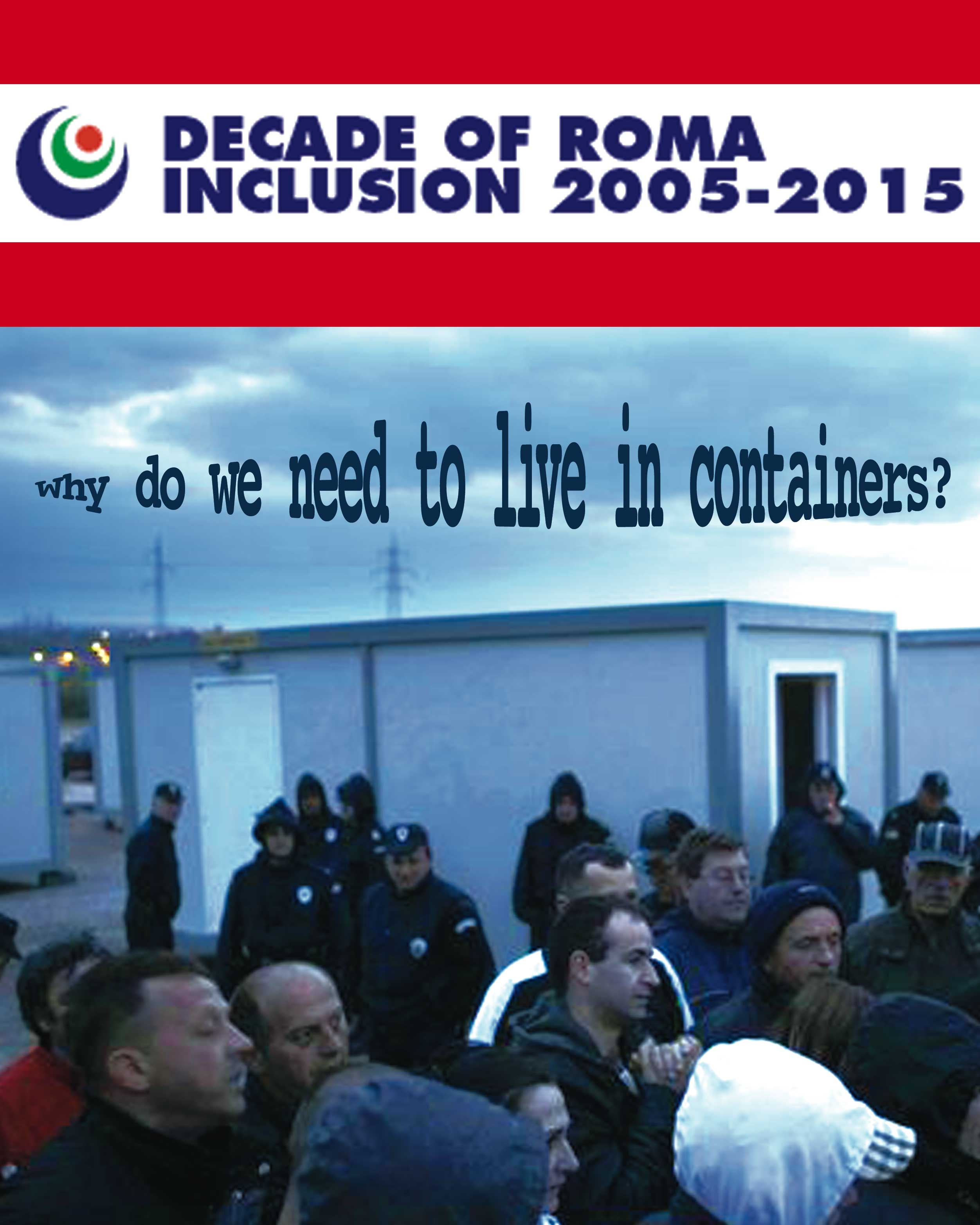
ROMA INCLUSION

http://www.cafebabel.de/article/41333/im-metallcontainer-roma-in-belgrad-serbien.html

http://www.cafebabel.co.uk/article/41230/belgrade-roma-belville-evictions-settlement-museum.html

Kategorien
ROMA

Polizist ermordet drei Roma / Off-duty cop shoots dead three Romani people

Bratislava – Ein 51-Jähriger Stadtpolizist soll am Samstag in der südslowakischen Stadt Hurbanovo vor einem Wohnhaus drei Menschen erschossen und einen vierten schwer verletzt haben. Nach Angaben von slowakischen Medien handelt es sich bei den Opfern um eine Roma-Familie. Der Mann hatte sich anschließend in einem Haus verschanzt und mit Selbstmord gedroht, mittlerweile wurde er von der Polizei festgenommen.
Über seine Motive ist bisher nichts bekannt. Der Verdächtige, der laut Medienberichten bis vor kurzem an der Spitze der städtischen Polizei gestanden haben, mittlerweile aber wieder in einen niedrigeren Dienstrang zurückgekehrt sein soll, begann am Samstagvormittag, außerhalb seiner Dienstzeit, anscheinend wahllos auf die Menschen vor einem Wohnhaus zu schießen. Das Opfer, das bei dem Schussattentat schwer verletzte wurde, liegt nach Angaben slowakischer Medien in einem Krankenhaus im Koma. In der Slowakei, wo Sinti und Roma rund zehn Prozent der Bevölkerung ausmachen, kommt es immer wieder zu Ausschreitungen gegen Roma. Erst Ende Mai hatte ein führender slowakischer Rechtsextremist ein Grundstück inmitten einer illegal errichteten Roma-Siedlung erworben und angekündigt die Wohnhäuser der Roma abreißen und die Bewohner vertreiben zu wollen. Der slowakische Premierminister Robert Fico hatte während des Wahlkampfes mit dem Vorschlag für Aufsehen gesorgt, Roma-Kinder in speziellen Internaten unterrichten zu wollen.

Quelle: http://derstandard.at/1339638094542/Polizist-ermordet-drei-Roma

Slovakia: Off-duty cop shoots dead three Romani people and injures two others

Kategorien
ROMA

Roma lost in EU-rope. Baia Mare


A major scandal broke out in Baia Mare where, in the last campaign week, USL Mayor Catalin Chereches moved the Roma living on the outskirts of the town in the former chemical laboratory of factory Cuprom, EVZ writes.

Wanting to prove that he keeps his election promises to clean the Craica area, inhabited by about 2,000 Roma, the mayor decided to move the first families over night. After announcing them that he would scrape off their camp unless they are moving, the mayor started acting upon his threats.
Supported by the local police, Chereches boarded the Roma on trucks and took them to the building that used to host the chemical laboratory of the famous Phoenix plant, also known as the “death factory.” The name of the plant was changed to Cuprom after 1990 and it was shut down in 2006, being considered one of the biggest polluters in Romania.

Toxic substances

In the building, the Roma found nobody had bothered to arrange it for living purposes. The walls had been whitewashed but inside the rooms there still are lockers with 15-25 years old chemical substances in them. The sinister look of a death camp was completed by all sorts of warning signals such as “lethal danger” or “no mixture of chemical substances allowed,” left on the windows and doors since when the plant was still working. Inside many rooms there were toxic substances. The Roma wanted to leave the factory premises, but were prevented by the local police. In the end, they stayed there, but soon after they became sick, feeling nauseous and having terrible headaches.

11 children and an adult taken by ambulance

The most affected were the children. Several ambulances were sent to the scene that night. Emergency Situations Inspectorate officials said 11 children and an adult were affected. Journalists and Roma say there were actually 22 children and 2 adults intoxicated. Hospital officials say those affected recover in a few hours and were allowed to leave. While the ambulances were sent to the plant, the head of the Roma community text messaged the mayor: “What are you trying to do, kill us? People are poisoned! The ambulances are coming!” The mayor replied, “Maybe they’re poisoned by the cleanliness. If they’re sick, let them take an ambulance, that’s what it’s for!” The mayor says everything was a set-up and that Roma leaders pepper sprayed the building to make it appear contaminated.
Quelle: Bucharest Herald

http://world.time.com/2012/06/21/romania-one-town-evicts-the-roma-in-its-midst/#to-g

Kategorien
ROMA

Rassismus mit DNA-Zertifikat

Von Jürgen Schönstein
Ungarn liegt ja ein wenig abseits meiner täglichen Wege, und darum hat mich diese Nachricht, die in der aktuellen Ausgabe von nature zu lesen ist, doch ziemlich verblüfft: Genome test slammed for assessing ‚racial purity‘ – das (laut nature) angesehene genetische Institut Nagy Gén ist unter Beschuss geraten, weil es einem Abgeordneten der rechtsextremen Jobbik-Partei ein Zertifikat* ausgestellt, das ihm bescheinigt, weder jüdische noch Roma-Vorfahren zu haben. nature benutzt dabei die Formulierung, dass dies eine Bescheinigung „rassischer Reinheit“ sei – was, wenn tatsächlich diese Worte gewählt wurden, ein echter Atavismus in die dunkelsten Zeiten des europäischen Rassismus wäre. Der Haken ist nur, dass es tatsächlich auf die genaue Formulierung ankommt – „A genetikai vizsgálat során … esetében nem találtunk roma – és zsidó népcsoportra jellemzö genetikai génváltozatot“ steht da, was ich mangels ungarischer Sprachkenntnisse via Google Translate übersetzen musste, und dabei kam raus „Eine genetische Untersuchung … Roma sind nicht gefunden worden – das jüdische Volk und Gruppen spezifische genetische génváltozatot“ (am letzten Wort ist das Übersetzungsprogramm gescheitert – vielleicht war ein Tippfehler in dem Zertifikat).*Quelle: Petöfi utca
Das klingt schon sehr stark nach „Rassenreinheitszertifikat“ (obwohl ich dies hier vor dem Hintergrund einer Gesellschaft schreibe, die diese Form des Rassismus – wenn auch auf freiwilliger Basis – mit großer Selbstverständlichkeit praktiziert; nahezu jedes offizielle Formular in den USA enthält einen Passus, in dem sich der Anstragsteller durch Angaben zu race identifizieren kann). Dies sei „professionell falsch, ethisch inakzeptabel – und illegal“, erklärte Jószef Mandl von der Budapester Semmelweis-Universität. Die berufs- und allgemeinethische Entrüstung kann ich nachvollziehen. die jursitische Bewertung hat mich überrascht – tatsächlich ist die Rechtslage für die Verwendung solcher genetischer Gutachten in Ungarn ziemlich eindeutig (sofern) nature hier die korrekten Informationen berichtet hat): Sie sind per Gesetz aus dem Jahr 2008 ausschließich für diagnostische Zwecke erlaubt.
Quelle: ScienceBlogs.de

http://derstandard.at/1339638779398/Test-im-Labor-Scharfer-Protest-wegen-Gen-Ariernachweis-eines-ungarischen-Politikers

Kategorien
ROMA

Salzburg Mob gegen Roma

Nach dem Überfall auf eine Bettlergruppe der Roma-Volksgruppe aus Rumänien kommen die mutmaßlichen Täter offenbar glimpflich davon. Es würden Zeugen und Kläger fehlen, heißt es bei Ermittlern. Die Tat geschah in einem Abbruchhaus.

Laut Polizei bräuchte es die betroffenen Rumänen für eine Anzeige, doch diese seien „unauffindbar“. Es würden auch Zeugen fehlen. Bis zum Samstag hatten die Bettler in einem leerstehenden Haus in Lehen gelagert. Dann wurden sie von einem Mob junger Türken überrascht, bedroht und sind seitdem verschwunden. Menschenrechtler ersuchen nun mögliche Zeugen des Zwischenfalls, sich bei der Polizei und Ermittlungsbehörden zu melden und Angaben zu machen.

Bettler eingeschüchtert und vertrieben

Es ist ein krasser Fall von Selbstjustiz, viele sprechen von einem Skandal, der da passiert sei: Eine Gruppe junger Türken soll es gewesen sein, die die Bettler eingeschüchtert und vertrieben haben soll. Dabei gab es zwei Leichtverletzte. Doch die Polizei sagt nun, sie habe nicht viel in der Hand gegen mutmaßliche Täter. Als Zeugen und Ankläger kämen nämlich nur die Rumänen in Frage. Diese seien aber über alle Berge.

Polizei hat alles „durch Zufall“ bemerkt

Die Ermittler haben nach eigenen Angaben die Auseinandersetzung per Zufall bemerkt, als fast alle Täter schon weg waren. Das so genannte „Rollkommando“ könnte also mit relativ geringen Konsequenzen davonkommen. Denn die nachweisbaren Delikte seien begrenzt, sagt Stadtpolizeikommandant Manfred Lindenthaler: „Es könnte maximal sein, dass eine Sachbeschädigung unter Umständen herauskommt. Dazu könnten eine Körperverletzung oder gefährliche Drohung kommen. Aber das werden die genauen Erhebungen dann auch zeigen, ob und was vorliegt.“

Sechs Verdächtige namentlich bekannt

Die Polizei müsse sich bei den Ermittlungen an die Gesetze halten, sagte Lindenthaler. Über eine mögliche Anklage wird die Staatsanwaltschaft entscheiden. Derzeit werde gegen sechs junge Männer ermittelt.
Quelle: ORF

Links: